Showing posts with label internet. Show all posts

Thursday, 10 September 2009

The Pursuit of Happiness

I love bad blogs. The more inane and the more obscure, the more I like them. To me, bad blogs are the whole point of the Internet– a platform for the left of centre, a voice for the far right, a soapbox for the underdog and a visual megaphone for the otherwise marginalised.

But I love good blogs too. The ones that have something true to say. The ones that tickle all my fancies simultaneously. The ones that I thank all the computer nerds for inventing RSS for. Tap dancing at the top of that list for me is Maira Kalman's And the Pursuit of Happiness, which she updates on the last Friday of each month and which I look forward to with Ghostbuster's anticipation.

If you have the inclination, there's an interview with Ms Kalman over at The Bygone Bureau and a talk she gave at TED over here.


Well, that's it for today's post. Thanks for making the effort to come and share some time with me in the Land of Meg. I hope you found something to take away with you – you over there at your computer being alive.

Friday, 21 August 2009

I Heart Michelle

OK, so the background of this story goes something like this: In December last year, on one of the blogs I read it said that if you leave your postal addresses as a comment, they would send you a love letter, no matter where in the world you live. And so I did.

A few weeks later my love letter arrived and I felt good about it for weeks. And then a few months later another love letter arrived and I felt just as great about that one too.

And now, a few months after the last one, another letter has arrived.

"Have a cup of tea and read an old dusty book that smells like the past," writes the sender, Michelle.

Who am I to argue??

Monday, 27 July 2009

Next Blog

I just clicked Next Blog on my Blogger toolbar and this is the first post that came up:
Sleepy Pooh Bear


This is a sweet little clock. The pooh bear on top lights up as a night light and it has an alarm and radio as well. I bought this one at the Goodwill store in Sault Sainte Marie, Michigan. It was stuck in the furthest corner of the store, upside down with a big hunk of clock on top of it. I couldn't just leave it there, so I took it home, cleaned it up, and added it to my collection. :)

From here.

Monday, 13 July 2009

The Local Campfire

This is the fireplace next to which we spent a great deal of our time last week. The house was très homey, albeit rather drafty. (I'm sure there's a Dad joke in there somewhere about written drafts and windy drafts, but I'll leave it up to mine to make it.)

Although our home here becomes super snug at the press of a button, we are missing the presence of the fire in our lives. Reading, writing, talking, knitting and making love by the heater just isn't the same.

When television was first invented then commercialised, apart from the programs it offered, I can definitely see why people were so inviting of it into their homes – there is much to be said about the comfort and company of flickering lights in the centre of a room. I agree with the sociologists who said that first television then the internet, are the new global campfires.

Although I found it difficult to be offline last week, I'm finding it just as hard to live without a fireplace now we're home.

Wednesday, 7 January 2009

Unknown Online Doors

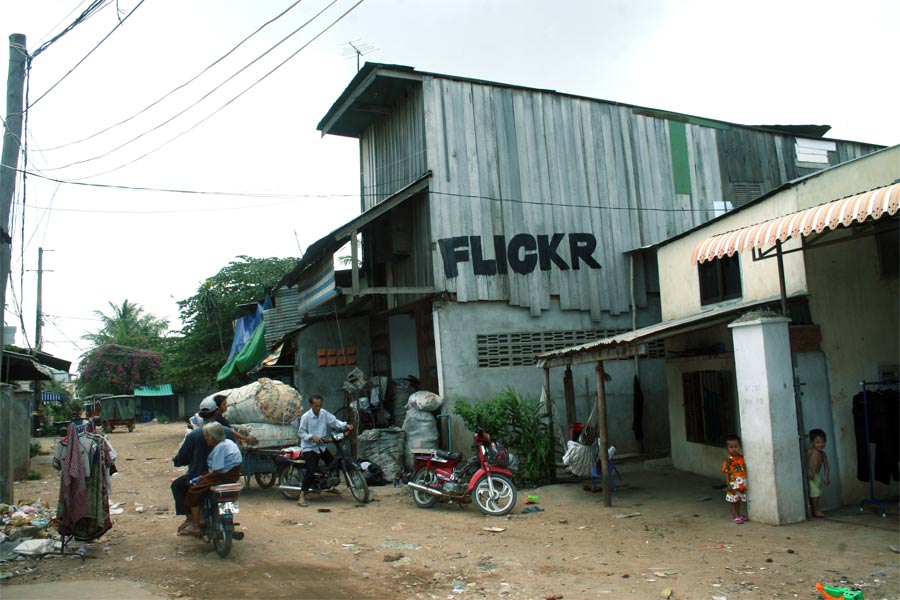
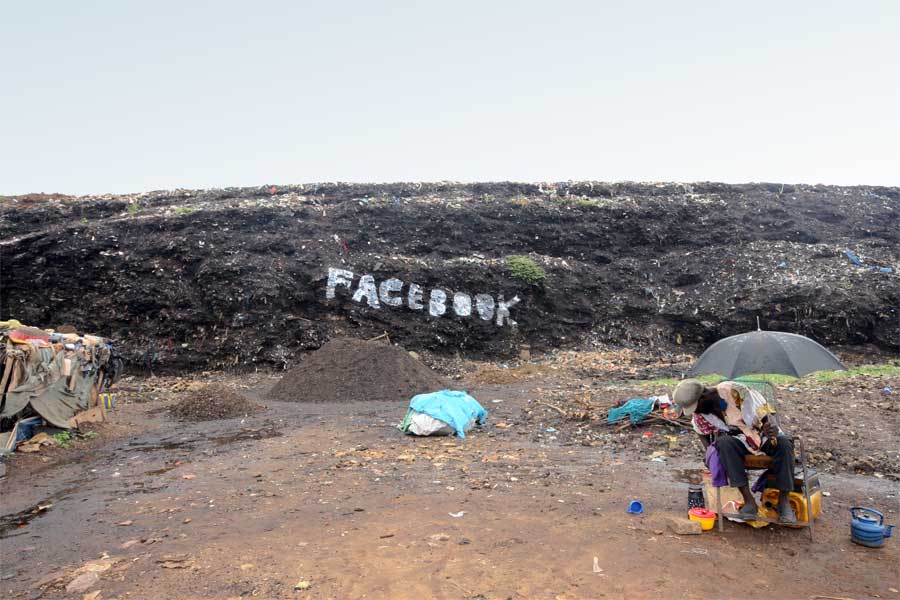
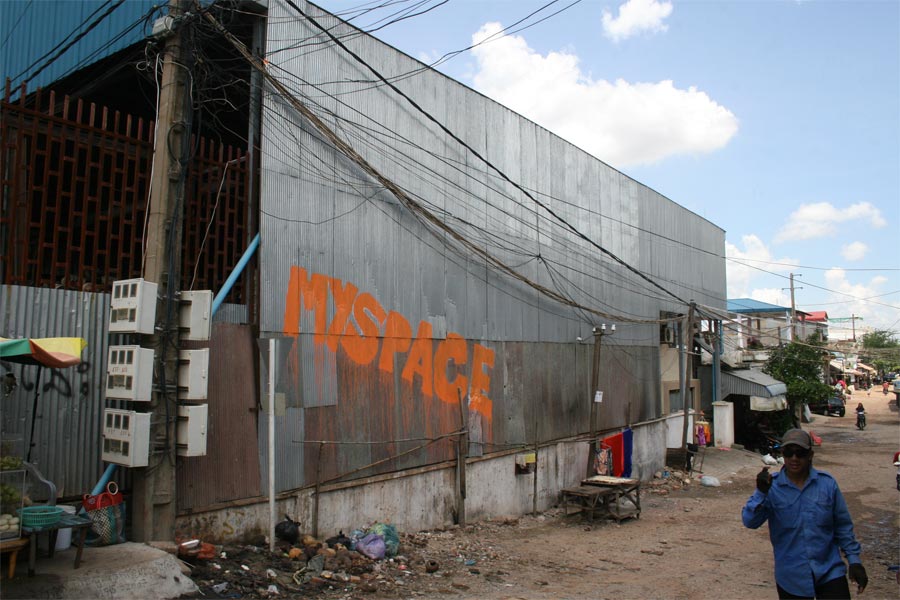
As well as teaching a course on blogging at the local neighbourhood centre next month, I am running a course called Exploring the World Wide Web. In it, people who are not confident knocking on unknown online doors will learn all about Facebook, MySpace, YouTube, Flickr, Twitter and more. The neighbourhood centre's course guide came out this week with my courses listed. To celebrate, here's this:

Artist Filippo Minelli says:
All my Contradictions have the same motivation/meaning. Technologies and the marketing behind them usually push the almost religious aspect of their evolution, as also said by Leander Kaheny in his Cult of Mac book, and the users are pushed to live in an intense way the abstraction from reality, living technologies only as an idea and sometimes without even knowing their real functions. And this aspect works for the social-networks too. 
The idealization connected with these experiences provokes a small-but-important detach of the perception of reality and what I want to do by writing the names of anything connected with the 2.0 life we are living in the slums of the third world is to point out the gap between the reality we still live in and the ephemeral world of technologies. 
It's a kind of reminder, for people like me which I'm an Apple user and also have social-network accounts that the real world is deeply far from the idealization we have of it, not only in the third world and even if technologies and globalization are good things.

Tuesday, 9 December 2008

I Heart Nadia

I heart Jake Bronstein. And I heart the Internet.

About three weeks ago, blogger-to-the-stars, Jake Bronstein, asked his readers: When was the last time you received a love letter? All you had to do was leave your address as a comment on his blog and a letter hand-written by one of his interns would be snailed to your heart.

Thank you, Nadia! Your love was successfully received.

Click for bigger.

Friday, 17 October 2008

Great Walls of Fire

From Boing Boing:
Australia's Great Firewall: Just Like China, Syria and Other "Free" Countries
In a move that seems to be happening without comment from the Australian media, the Australian government is introducing a censorship regime ostensibly targeted at stopping teenagers accessing online porn.

But rather than being an opt-in system, it's "opt-out." I use the scare quotes because, and this is the most insidious part, you can't actually opt out - you can merely be placed on an alternative blacklist which, instead of blocking "content inappropriate for children," block any material deemed to be illegal.

The fact that it will likely reduce everyone's internet performance is secondary; It will most likely incorrectly block 1% of sites, and now what you are allowed to view online is determined and controlled by the state (although most likely quite inaccurately).

The rationale is that since they're setting it up anyway, they're morally obliged to block traffic deemed illegal:

"Illegal is illegal and if there is infrastructure in place to block it, then it will be required to be blocked — end of story."

I don't think I need to go into too much detail about the potential threat to our civil liberties.

People of Australia, please write to your MPs to voice your opposition to this.
More here.

Wednesday, 9 July 2008

It's Official

Thank you to the people who told me about the article, Blogging makes you happy - it's official in The Age's 'Green Guide', from where this comes:
Researchers in the US have concluded that blogging also makes bloggers better thinkers.

US neurologists Fernette and Brock Eide conducted a survey of the blogosphere and posted their results on their own site. The research began with the proposition that our mental activities actually cause changes in the structures of our brains - not only what we think, but how we think as well.

They decided to focus on blogging because it represents a significant new activity that might be changing the way people think, and concluded that blogging can be a powerful promoter of creative, intuitive and associational thinking.

The sheer ease of being able to publish a blog online promotes spontaneous connections and fosters creativity. The neurologists also concluded that blogging promotes critical and analytical thinking because blogs, at their best, are rich in ideas and promote active exchange and critique.

Friday, 27 June 2008

Hello .edith

Yesterday, the organisation that oversees the Internet, ICANN (Internet Corporation for Assigned Names and Numbers), unanimously approved the move to introduce domain names other than .com, .org, .net and 21 other suffixes we have come to be familiar with.

Some people are predicting a goldrush mentality to develop.

.countries, .cities, .brands and .names will in early 2009, be available to the highest bidder.

Just as we now can't imagine life without the Internet, I bet soon we'll be wondering the same thing about the multiplicity of domain names, whether for good or bad, or just plain confusing reasons. 

But what I think will definitely have a positive impact, is ICANN's decision to allow extensions in languages other than English, with characters other than the 37 Roman ones currently available.

It really makes me wonder if the virtual world will become the last bastion of diversity.